Most travelers approach packing all wrong. They pull up a generic, 150-item checklist from the internet, panic about “what-if” scenarios, and end up dragging a bloated, 50-pound suitcase through cobblestone streets. This constant reinvention before every trip leads to decision fatigue, anxiety, and inevitably, overpacking.
True travel freedom doesn’t come from a static list; it comes from a modular system.
Efficiency relies on a framework, not a scramble. Every trip—whether it’s a 72-hour business sprint or a month-long international haul—relies on the exact same checklist of foundational essentials. Once you establish that core anchor, you simply snap on a specialized gear module based on your destination.
By breaking your luggage down into interchangeable, field-tested modules, you can prepare for any destination on Earth in under 15 minutes. These are the 6 core packing lists and frameworks that form the foundation of a perfect travel system.
The Core Strategy: The 80/20 Rule of Luggage
When you look at everything you carry, your gear naturally splits into two distinct categories:
- The Core Anchor (80% of your peace of mind, 20% of your bulk): These are the non-negotiables. If you lose your passport, your prescription medication, or your primary credit cards, your trip is over.
- The Destination Variables (20% of your peace of mind, 80% of your bulk): This is your clothing, specialized footwear, gear, and toiletries. These change entirely depending on whether you are heading to a music festival, a freezing winter city, or a tropical resort.
The fatal mistake most travelers make is mixing these two categories into one giant, chaotic list. By separating them into an immutable “Anchor List” and interchangeable “Modules,” you create a system that can be deployed for any itinerary at a moment’s notice.

The 6 Essential Building Blocks of a Perfect System
To build a master system that works seamlessly across various airlines and climates, you need to develop six distinct sub-lists. Each serves a specific structural purpose inside your luggage.
1. The Anchor: The Ultimate Travel Packing List
Every packing blueprint requires an unshakeable foundation. This list contains your non-negotiables: the core data, critical tech, documentation, and baseline essentials that cross international borders with you regardless of climate or itinerary. It focuses strictly on the items that would cause a trip to fail if forgotten. By keeping this anchor list completely separate from your clothing and activities, you create a baseline that ensures you never leave behind a vital passport, a proprietary camera charger, or essential medication again.
Download Your FREE Packing LIST
We have a packing list for all of your travel packing needs.

2. The Wardrobe Formula: The Sudoku Method Packing List
The single biggest source of luggage bulk is clothing. Most people pack individual outfits rather than a cohesive system, resulting in a suitcase full of pieces that don’t match. The Sudoku Method solves this mathematically. Built around a strict matrix—typically a 4-3-2-1 ratio of tops, bottoms, shoes, and layers—this framework treats clothing like interlocking puzzle pieces. By ensuring every top coordinates with every bottom, a tiny capsule of clothing generates weeks of distinct outfits. It is the ultimate antidote to the “just in case” clothing trap.

Read the Post to learn more
3. The Micro-System: The In-Flight & Personal Item List
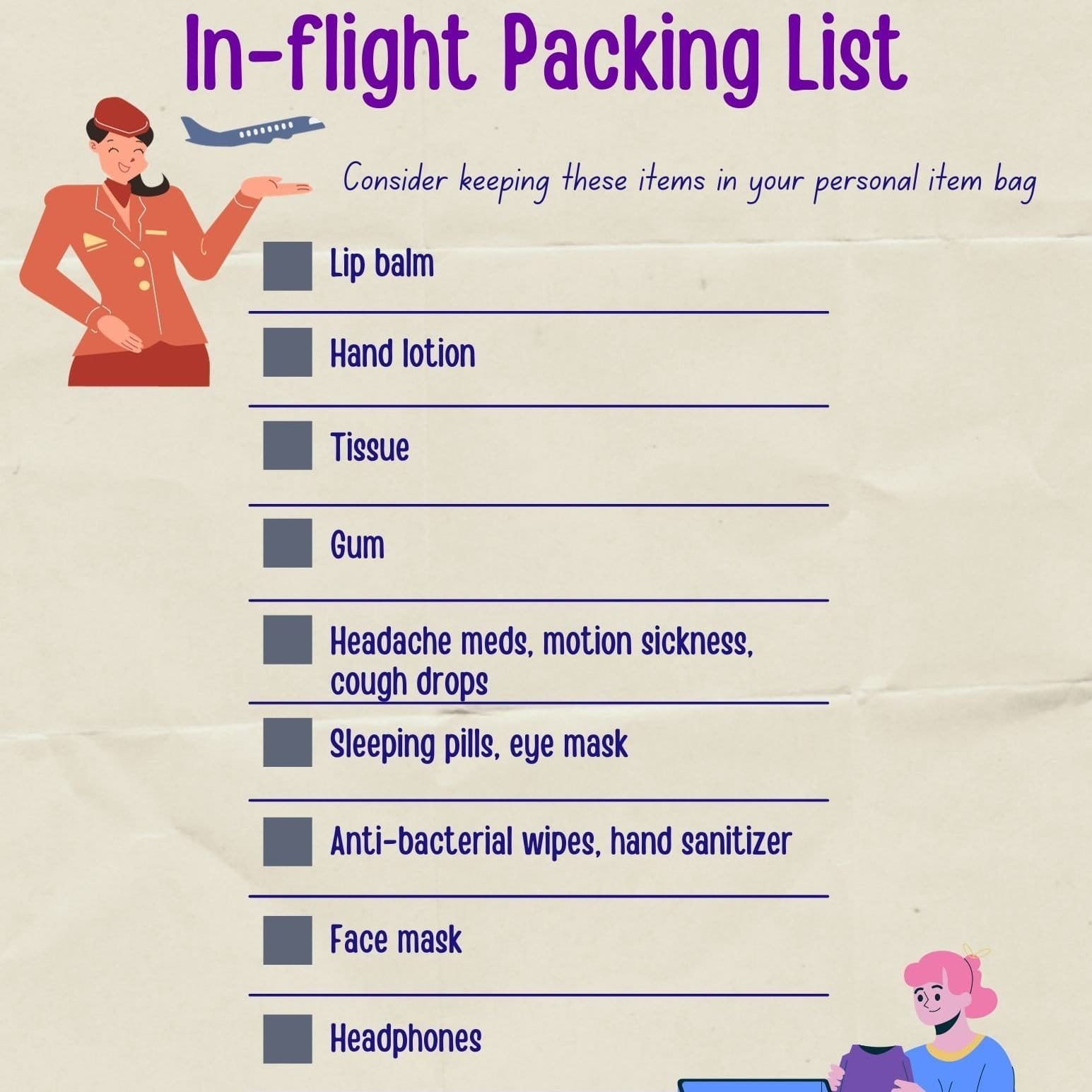
Long-haul transit introduces a specific type of friction. When you are crammed into an economy seat for ten hours, you do not want to be standing in the aisle, fighting to pull items out of the overhead bin. This micro-system isolates exactly what needs to be within arm’s reach underneath the seat in front of you. It balances hydration, cabin pressure adjustments, noise-cancellation ecosystems, and zero-bulk layers so you can survive long transits comfortably without ever breaking the plane of your main carry-on.
4. The Professional Shift: The Business Travel Packing List
Business travel requires a delicate balance: you must arrive looking sharp and pressed, but moving through airports quickly means you cannot afford to check a bag. This module trades generic casual wear for wrinkle-mitigation strategies and technical redundancies. It covers how to pack structured blazers without breaking the shoulder canvas, managing multiple device charging ecosystems for remote boardrooms, and keeping professional attire intact using dedicated rolling configurations.

Read the Post to learn more
5. The High-Scrutiny Zone: The TSA-Approved Toiletries List
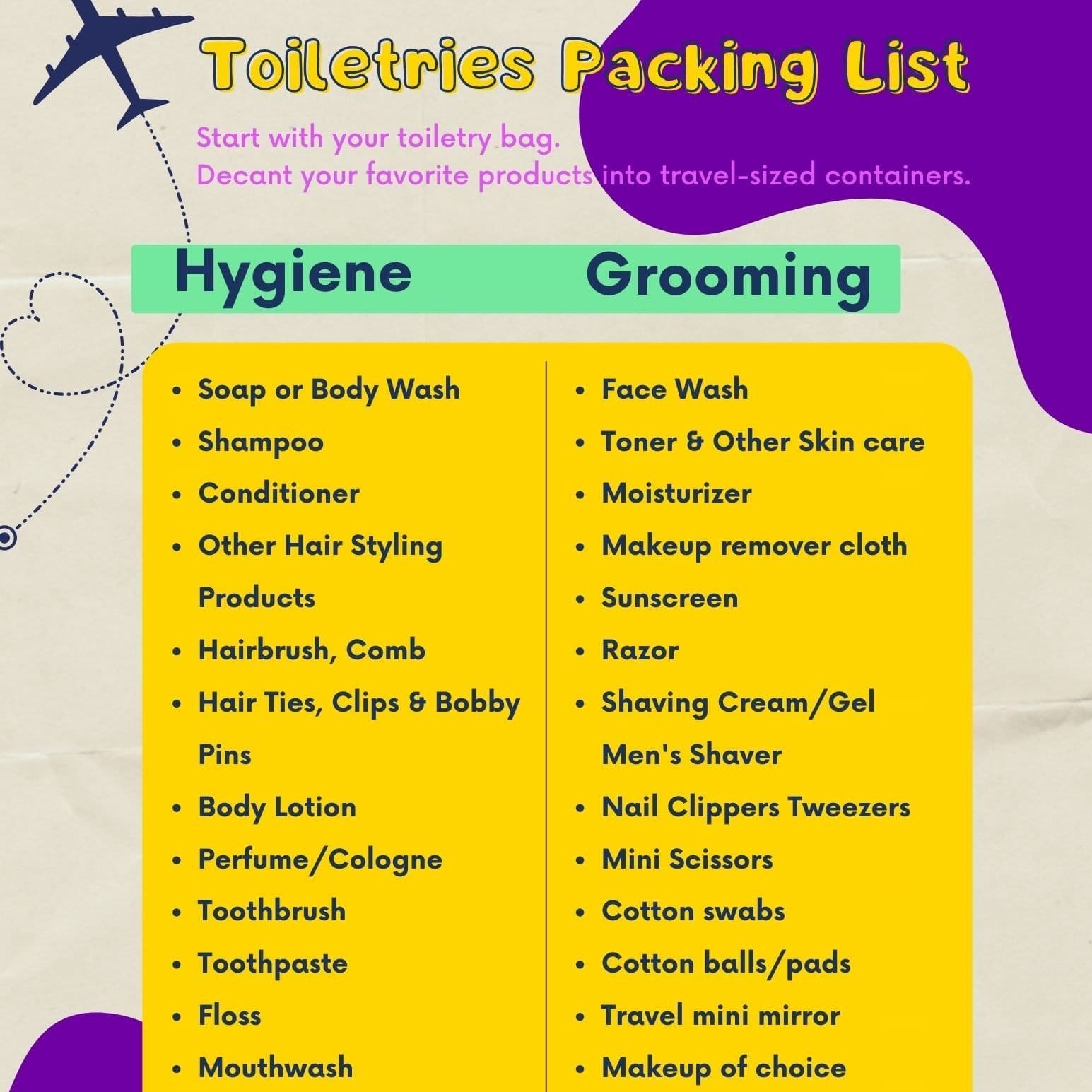
Airport security checkpoints are designed to expose sloppy packing. This module approaches your liquid and grooming routine with surgical precision. Instead of tossing random drugstore bottles into a bag, it optimizes for liquid limits, introduces solid-state alternatives (like solid colognes and tooth tablets), and organizes your gear for rapid extraction. The goal of this list is twofold: pass airport security in under 30 seconds and guarantee zero leaks under cabin pressure shifts.
6. The Seasonal Pivot: The Travel Capsule Wardrobe Workbook
When your itinerary spans a hot beach resort and a freezing mountain city, standard packing lists collapse. This workbook is a strategic blueprint for handling volatile climates without adding physical weight to your bag. It teaches you how to map out fabric weights, utilize technical merino wool as a thermoregulating base, and stack high-performance outerwear so that your wardrobe adapts to shifting weather conditions while remaining entirely inside a single carry-on.

Read the Post to learn more
How to Build Your Master System: Step-by-Step
Ready to build your own framework? Follow this sequence to map out your personal master list:
- Step 1: Define Your “Day Zero” Kit. Write down the absolute bare minimum items you need to legally and safely exit an airport on the other side of the world. This is the absolute start of your Anchor List.
- Step 2: Choose Your Container Constraints. Your packing list should never dictate your bag size; your bag size dictates your packing list. Look up the underseat and overhead dimensions for the strictest airline you fly, and let those physical boundaries enforce your limits.
- Step 3: Audit for Versatility. Look at every clothing item you plan to add to your master capsule. If a shirt cannot be worn in at least three different social scenarios, or matched with three different bottoms, remove it from the system.
Stop Reinventing the Wheel Before Every Trip
You don’t need to manually write a new packing list every time you book a flight. The heavy lifting, the cross-airline dimensions math, and the gear testing have already been completed for you.
We built a private, interactive Packing List Hub exclusively for the PackBetter community. Inside, you’ll get instant, unrestricted access to our master adaptable template, the exact blueprints and layouts for the Sudoku Method, specialized seasonal modules, and downloadable workbooks for every travel scenario imaginable.