
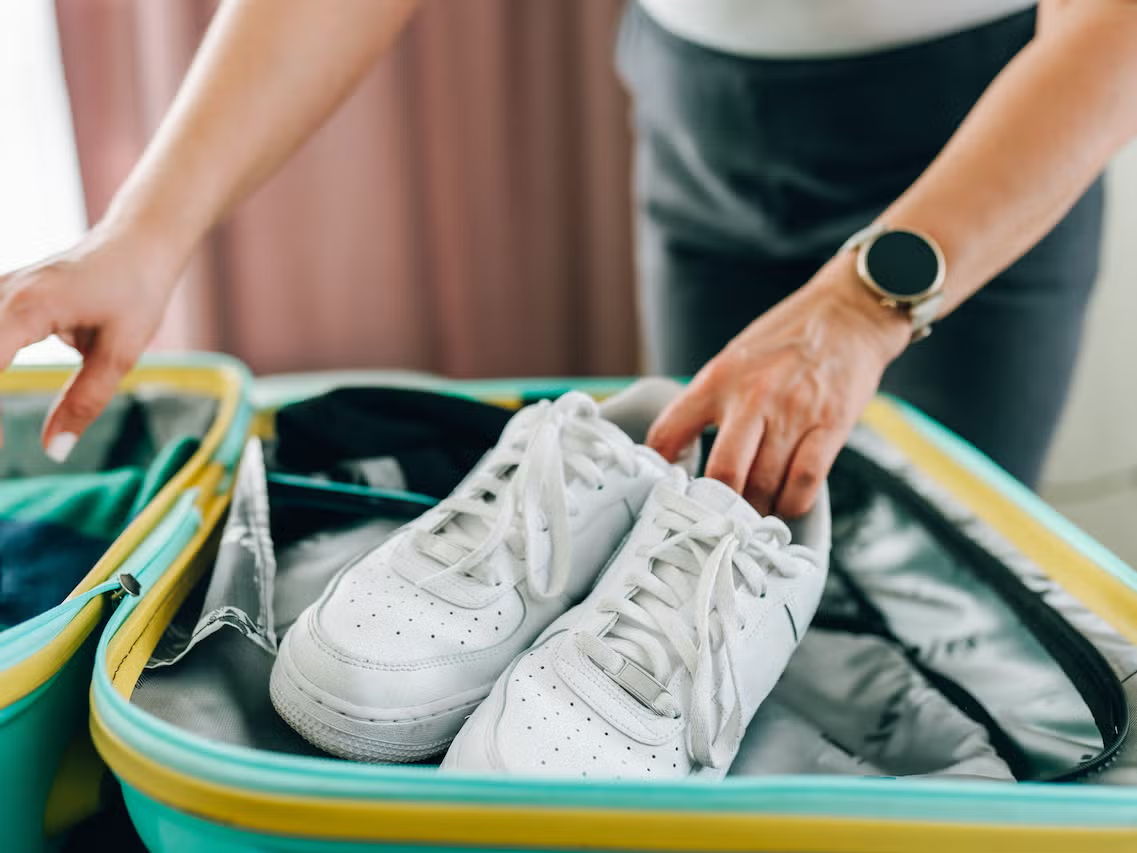
Footwear is arguably the most difficult item to pack. Unlike clothing, shoes are rigid, often dirty, and possess a fixed volume that refuses to compress. In my experience, the most difficult part of learning how to pack shoes in a suitcase to save space isn’t the number of pairs you bring, but how you treat the “dead air” they create.
When we view shoes as structural obstacles rather than just accessories, we can apply a more intentional packing logic. This involves shifting from “tossing them in” to a system of nesting, protecting, and filling.
The “Rolling” Method: When It Actually Works
The idea of “rolling” shoes often confuses travelers, and for good reason—you cannot roll a leather loafer. This technique is a specialized tool for flexible, unstructured footwear like canvas slip-ons, thin sandals, or mesh gym shoes.
To execute this, you stuff the toe with a small item to maintain its front-end shape, then fold the heel toward the center and roll the entire shoe into a tight bundle. Securing the roll with a heavy-duty rubber band or the shoe’s own laces keeps it from uncurling and wasting space. For any other type of shoe, however, you’ll need to rely on displacement and nesting.
Mastering Internal Displacement
The single biggest waste of space in a suitcase is the empty cavity inside a shoe. For every pair you bring, you are effectively carrying two small, empty boxes.
- Core-Filling: Use the interior of your shoes to store small, pliable items like socks, underwear, or rolled t-shirts.
- Shape Protection: Beyond saving space, this prevents structured shoes from being crushed or creased under the weight of your other gear.
- Fragile Tech: A sneaker’s toe box is an excellent, padded environment for a Macbook charger, a coiled power bank, or even a fragile souvenir wrapped in a sock.
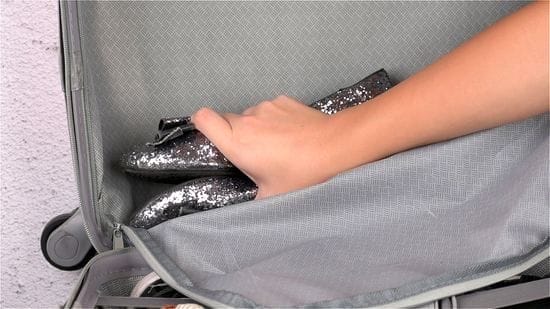
Nesting: The Geometry of Pairs
Packing shoes side-by-side as you would wear them is a geometric failure; it creates irregular gaps that are difficult to fill. Instead, use Structural Nesting. To minimize the footprint of your footwear, you must break the “side-by-side” habit.
The Perimeter Wall: For hardshell luggage, line the spine of the suitcase with your heaviest shoes. This creates a “foundation” that prevents the rest of your gear from shifting during transit.
Heel-to-Toe Inversion: Place shoes sole-to-sole, but flip one so the heel of the left shoe sits against the toe of the right. This creates a uniform rectangular block that “slots” into the corners of your suitcase.
Hygiene Barriers: Shoe Bags vs. Shower Caps
The most overlooked part of packing shoes is what they’ve touched. Airport floors and city streets are not things you want pressed against your clean white linens.
While dedicated shoe bags offer excellent organization, they often add unnecessary bulk. For a more efficient barrier, many professional travelers use disposable shower caps. Stretching a shower cap over the sole of a nested pair creates a paper-thin hygiene barrier that takes up virtually zero volume. If you prefer a more durable option, look for ultralight nylon shoe cubes that offer compression zippers to further reduce the pair’s footprint.
The Weight of the Barrier: Heavy-duty shoe boxes are an organizational luxury that costs you 15% of your total volume.
The Shower Cap Hack: A standard plastic shower cap is the most efficient barrier ever designed for footwear. It provides a 360-degree seal around the sole without adding the bulk of a zippered bag.
Odor Mitigation: For long-haul trips, a dry tea bag or a charcoal sachet tucked into the “core-fill” prevents the enclosed environment of a suitcase from becoming a liability.
Gear Selection: Tools to Pack Your Shoes Better
Before selecting a tool, identify your constraint: Are you limited by weight or volume?
| Tool | Best For | Trade-Off |
| Ultralight Compression Cubes | Managing soft-sided sneakers and gym gear. | Can over-compress and damage shoe structures. |
| Clear Drawstring Bags | Rapid identification and hygiene. | Provides zero structural protection against crushing. |
| Structured Shoe Cubes | High-end leather or “Green Jacket” style formal wear. | Adds fixed weight and volume to the bag. |


I tried rolling my shoes, and it worked like a charm! I was able to pack twice as many shoes without taking up much space. Thanks for the tip!
You’re welcome! I’m glad to hear that rolling your shoes was a success for you. It’s a great space-saving technique that many travelers find effective. If you have any more questions or need further tips, feel free to ask!
Can you recommend any specific brands or types of shoe bags that work well for packing shoes?
Certainly! A popular brand that many travelers swear by is ‘Eagle Creek’. They offer various sizes of shoe bags that are designed to keep your shoes separate from the rest of your belongings and prevent any dirt or odor transfer. Another option is ‘Shacke’ shoe bags, which are known for their durability and water-resistant material. Both brands have received positive reviews from frequent travelers.
I’m concerned that packing shoes in the same bag might cause my clothes to get dirty. Any suggestions for preventing this?
I understand your concern. One way to prevent your clothes from getting dirty is by using shower caps to cover the soles of your shoes. This way, any dirt or debris on the soles will be contained. Additionally, you can place your shoes in a separate compartment or pocket within your luggage to further minimize the risk of dirt transfer. Utilizing shoe bags can also help keep your shoes separate from your clothing. It’s always a good idea to pack your shoes in a way that works best for you and your specific travel needs.